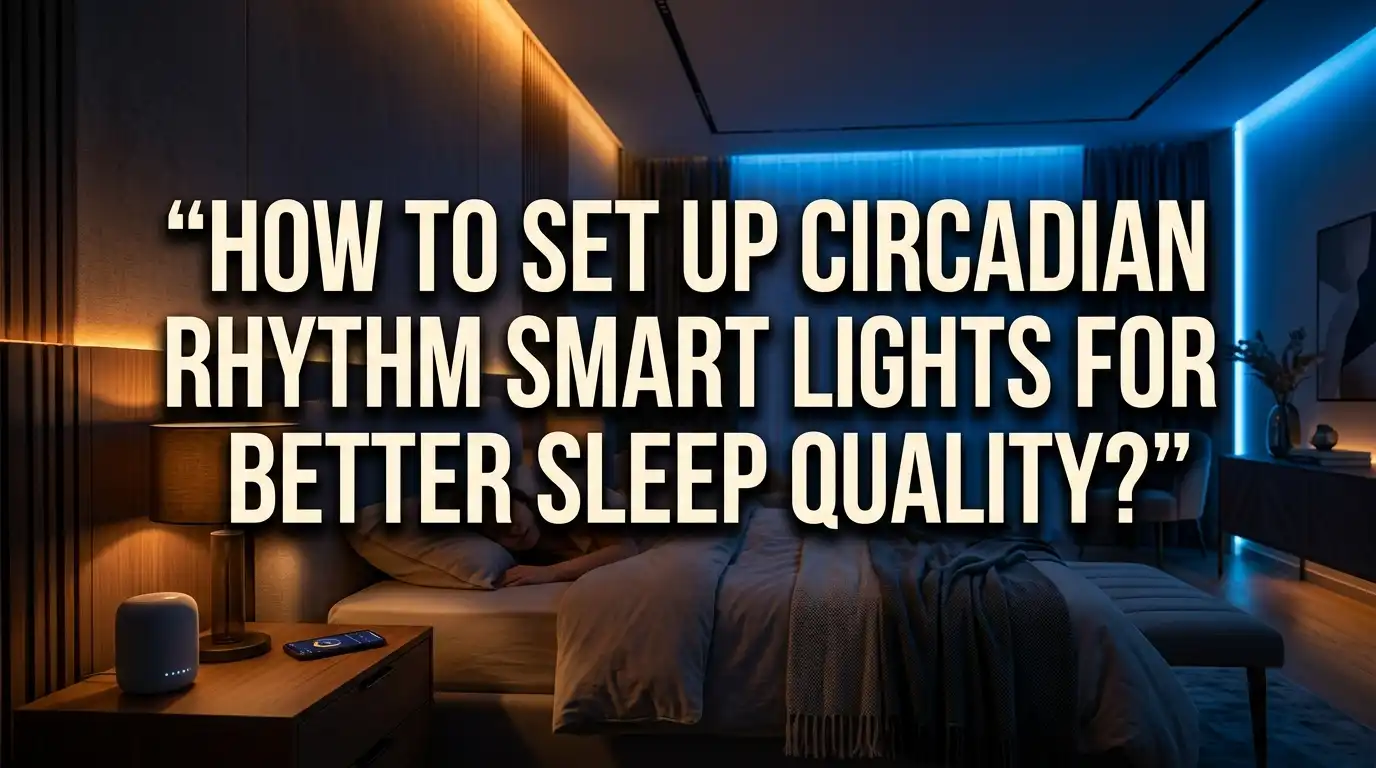
How to Set Up Circadian Rhythm Smart Lights for Better Sleep Quality?
Do you struggle to fall asleep even when you feel tired? The problem might be your lights, not your mind.
Circadian rhythm smart lights copy natural daylight patterns. They shift color and brightness to match your body’s internal clock.
Your body relies on light cues to know when to feel awake or sleepy. Bright blue light tells your brain it’s daytime. Warm amber light signals bedtime is near.
Smart lighting works with this natural system. It adjusts automatically throughout the day. Morning light stays bright and cool. Evening light turns soft and warm.
This guide shows you exactly how to set up these lights for better sleep quality. You will learn how to sync lighting with sunlight exposure. We cover the best times to start dimming before bed.
By the end, you will have a simple, effective lighting routine. This routine supports deeper, more restful sleep every night. No complicated tech skills are required.
Let’s get your lights working for your sleep, not against it.
In a Nutshell
- Match your lights to the sun. Bright, cool light works best in the morning and afternoon. This keeps your body clock on track.
- Start dimming early. Lower your light levels 2 to 3 hours before bed. This tells your brain it’s time to wind down.
- Switch to warm tones at night. Use color temperatures between 1800K and 2200K for at least two hours before sleep. Warm amber light supports melatonin production.
- Cut blue light exposure. Avoid bright, blue-rich light 1 to 2 hours before bedtime. This helps your body relax naturally.
- Try sunrise simulation. A gentle wake-up light can make mornings easier. It mimics a natural sunrise instead of a jarring alarm.
- Keep it simple. You don’t need every smart feature. Even basic dimmable bulbs paired with a smart switch can work well.
What Is Circadian Rhythm Lighting and How Does It Work?
Your body has an internal clock called your circadian rhythm. This clock controls when you feel awake, hungry, and sleepy. Light is the strongest signal that tells your body what time it is.
Circadian rhythm lighting works by mimicking the natural sun. During the day, sunlight is bright and blue-rich. This light tells your brain to stay alert and focused. Your body produces less melatonin (the sleep hormone) when exposed to this type of light.
As the sun sets, light becomes warmer and dimmer. Your brain recognizes this change and starts producing melatonin. Your body temperature drops slightly. You naturally feel ready for sleep.
Smart lights replicate this entire cycle indoors. They adjust their brightness and color temperature throughout the day. In the morning, they emit bright, cool light to wake you up. This stimulates alertness and energy. During the afternoon, they maintain moderate brightness to support focus and productivity.
Here’s where sleep comes in. About two to three hours before bedtime, smart lights gradually dim. The color temperature shifts from cool white (5000K or higher) to warm amber and red tones (1800K to 2200K). This warm light signals your body that evening has arrived.
The key is consistency. Your body learns to expect these light changes. Over time, your sleep becomes deeper and more natural. You fall asleep faster and wake feeling more refreshed.
The science is straightforward. Blue light suppresses melatonin production. Warm light supports it. Smart lights let you control this process automatically instead of relying on inconsistent natural light or harsh overhead bulbs.
This system works because it respects how your body actually functions. You’re not fighting your biology. Instead, you’re giving your body the light signals it needs to sleep well.
Choosing the Right Smart Lighting Setup for Your Space
Start by assessing your room layout and light exposure. Rooms with windows need different approaches than interior spaces. Identify where you spend the most time during the day and evening. This tells you which fixtures matter most for your circadian rhythm.
You have two main setup options. The first uses smart bulbs that change color temperature automatically. These work best if you want full control over warm and cool light shifts throughout the day. The second uses dimmable LED bulbs paired with smart switches. This simpler option works well if you only need brightness control without color adjustments.
Consider your budget and complexity tolerance. Full color temperature systems offer more features but require more setup and learning. Basic dimming systems are easier to install and maintain. Both approaches support better sleep when used correctly.
Think about room size and fixture placement. Bedrooms benefit most from overhead lights and bedside lamps on your system. Living areas need multiple fixtures to create consistent lighting throughout the space. Bathrooms matter too since morning light exposure helps set your daily rhythm.
Check your existing infrastructure before purchasing anything. Some smart systems work with standard light switches. Others need specific wiring or compatible fixtures. Knowing this prevents frustration later.
Start small if you’re new to smart lighting. Begin with your bedroom, then expand to other rooms. This approach lets you learn the system without overwhelming yourself. You’ll also see sleep improvements faster with focused bedroom lighting.
Test different placements before finalizing your setup. A light positioned behind your head works differently than one in front of you. Overhead fixtures create different effects than lamps at eye level. Experiment for a few nights to find what feels natural in your space.
Step-by-Step: Programming Your Lights to Match Your Daily Cycle
Start by opening your smart lighting app or control panel. Most systems show a dashboard where you can create schedules and scenes. Look for options labeled “scenes,” “routines,” or “automations” depending on your system.
Create your first scene for morning light. Set it to trigger 30 minutes before you wake up. Use bright, cool white light around 5000K to 6500K. This mimics natural sunrise and helps your body transition from sleep to wakefulness gradually.
Next, program your daytime scenes. Keep lights bright and cool during work hours (9 AM to 5 PM). Most systems let you set these to activate automatically based on time. This maintains alertness and supports your natural energy levels.
Now build your evening transition. Start dimming lights around 6 PM to 7 PM. Reduce brightness by 20 to 30 percent every hour. This gradual change signals your body that evening is approaching without shocking your system.
Program your pre-sleep scene 2 to 3 hours before bedtime. Switch to warm amber tones between 1800K and 2200K. Dim brightness to 30 to 50 percent of maximum. This is your most important scene for sleep quality.
Set a final “sleep mode” scene for 30 minutes before bed. Reduce brightness to 10 to 20 percent. Some systems offer red light options, which work well at this stage. This scene prepares your brain for melatonin production.
Test each scene before committing to the full schedule. Adjust timing based on your actual wake and sleep times. Most apps let you override automatic schedules manually if needed.
Save your complete schedule and enable automation. Your system will now run these scenes daily without manual input. Check the schedule weekly to ensure it still matches your routine. Small adjustments after the first two weeks often improve results significantly.
Creating the Perfect Evening Wind-Down and Sunrise Wake-Up Routines
Your evening wind-down routine tells your body it’s time to rest. Smart lights make this process automatic and effective.
Start dimming your lights 2 to 3 hours before bed. This gradual reduction signals your brain to prepare for sleep. Don’t wait until bedtime to make changes. Your body needs time to adjust.
Around 2 hours before sleep, shift to warm color temperatures. Aim for 1800K to 2200K tones. These warm, amber hues resemble candlelight and sunset. They feel natural and calming to your eyes.
Reduce brightness significantly in your final hour before bed. Lower your lights to 10 to 20 percent of full brightness. This creates a relaxing environment that supports melatonin production. Dim lighting tells your body sleep is approaching.
For your morning routine, reverse this process. A gentle sunrise simulation works best. Start with soft, warm light 30 minutes before you wake. Gradually increase brightness over those 30 minutes. Light intensity should grow as color temperature shifts toward cooler, bluer tones.
This gradual wake-up feels less jarring than a sudden alarm. Your body naturally transitions from sleep to alertness. You’ll feel more refreshed and alert.
Keep your schedule consistent every single day. Weekends matter too. Your body thrives on predictability. Inconsistent timing confuses your internal clock.
Avoid checking your phone or other screens during wind-down. These devices emit blue light that fights your lighting setup. Put devices away at least 1 hour before bed.
Combine your lighting routine with other healthy habits. Exercise earlier in the day, not close to bedtime. Avoid caffeine after 2 PM. These actions work together with your smart lights.
Test your scenes for a full week before adjusting. Notice how you feel. Small tweaks may help you find your perfect timing. What works for others might need adjustment for your unique needs.
Best Practices for Maximizing Sleep Benefits
Your smart lights work best when you use them consistently and intentionally. The key is treating them as a tool that supports your body’s natural rhythm, not as a replacement for good sleep habits.
First, stick to your schedule every single day. Your body adapts to light patterns quickly, but only if they stay predictable. Weekends matter just as much as weekdays. Even one night of irregular lighting can disrupt the progress you’ve made.
Second, combine your lighting setup with other sleep habits. Avoid caffeine after 2 PM. Exercise during daylight hours to strengthen your circadian signal. Keep your bedroom cool, around 65 to 68 degrees Fahrenheit. These habits work together with your smart lights to create real change.
Third, reduce screen time during your evening wind-down. Your phone, tablet, and computer all emit blue light that fights your warm lighting efforts. Put devices away at least one hour before bed. If you must use screens, enable their blue light filter or wear blue light blocking glasses.
Fourth, monitor how you actually feel. Track your sleep quality for two to three weeks. Note when you fall asleep, how many times you wake up, and how rested you feel in the morning. Small adjustments to your light timing or brightness levels can make a big difference based on your personal response.
Fifth, be patient with the process. Your circadian rhythm didn’t shift overnight, and it won’t reset overnight either. Most people notice improvements within one to two weeks, but full adaptation takes about a month.
Finally, keep your setup simple. You don’t need every feature available. Focus on the core functions: morning brightness, daytime stability, evening dimming, and warm tones before sleep. The best system is one you’ll actually use every day.
Common Mistakes That Undermine Circadian Lighting Results
Many people set up circadian lighting but don’t see results because they make preventable mistakes. Understanding these errors helps you get better sleep faster.
Blue light exposure too close to bedtime is the most common problem. Your eyes stay sensitive to blue wavelengths until about 1 to 2 hours before sleep. If you keep bright, cool-toned lights on right up until bedtime, you block melatonin production. Your body stays alert when it should be winding down. Shift to warm amber tones earlier than you think necessary.
Inconsistent scheduling undermines your entire setup. Your circadian rhythm depends on repetition. If you dim lights at 8 PM some nights and 10 PM others, your body never learns when to prepare for sleep. Consistency matters more than perfection. Pick a schedule and stick with it every single day, even on weekends.
Overcomplicating your system causes people to abandon it. You don’t need color changing bulbs, multiple scenes, and advanced automation to start. A simple dimmable light with a warm color option works well. Add complexity only after basic dimming becomes routine.
Ignoring your actual bedroom environment creates problems too. If outside light streams through windows during your wind-down, no amount of smart lighting helps. Close curtains or use blackout shades. Bright overhead fixtures can also work against your goals. Use softer, lower-level lighting instead.
Expecting instant results leads to disappointment. Your body needs 1 to 2 weeks to adjust to new lighting patterns. Track how you feel during this adjustment period. Some people notice improvements in energy levels before sleep quality improves.
Finally, relying only on lights won’t work. Smart lighting supports better sleep but doesn’t replace exercise, caffeine timing, or a consistent wake time. Combine your lighting routine with other healthy sleep habits for real success.
Troubleshooting Common Setup and Performance Issues
Your smart lights might not work as expected. Let’s fix the most common problems.
Lights won’t sync with your app. Check your WiFi connection first. Your lights need a strong signal to respond. Move your router closer if the connection drops. Restart both your app and the lights by unplugging them for 30 seconds. Then plug them back in and reconnect through your app.
Color temperature isn’t changing. Some lights only dim instead of changing color. Verify your bulbs support color temperature adjustment. If they do, check that your automation scene actually includes a color change command. Open your app and confirm the warm tone setting is saved correctly.
Brightness feels too bright before bed. Your dimming schedule may start too late. Remember to begin dimming 2 to 3 hours before sleep. If you’re already doing this, reduce your brightness levels even more. You might need to go lower than you think.
Lights turn on at the wrong time. Check your app’s time zone settings. Incorrect time zones cause schedules to shift by hours. Also verify your sunrise and sunset times match your actual location.
You’re not seeing sleep improvements. This usually means inconsistency. Missing even a few nights breaks the routine. Your body needs at least 2 weeks of consistent use to adapt. Also check if blue light from phones or screens is canceling out your lighting work.
Lights flicker or turn off unexpectedly. Your bulbs may be overheating. Ensure they have proper ventilation in your fixtures. Replace any bulbs that feel excessively warm.
Automation scenes aren’t triggering. Open your app and manually run each scene. If they work manually but not automatically, your scheduling rules didn’t save. Re enter them and confirm they’re active.
Final Thoughts
Setting up circadian rhythm smart lights is a simple way to support better sleep. You don’t need fancy gadgets or complicated systems to see real benefits.
Your body responds to light cues every single day. When you align your lighting with natural daylight patterns, you help your brain know when to feel alert and when to wind down.
The core steps stay the same no matter which system you choose. Sync with natural light, dim gradually in the evening, and shift to warm tones before bed.
Avoid blue rich light close to bedtime. This single change makes a noticeable difference in how fast you fall asleep.
Gentle sunrise simulation helps you wake up feeling less groggy. Your body eases into the day instead of jolting awake to a harsh alarm.
Remember that lighting alone won’t fix poor sleep habits. Combine your setup with a consistent schedule, reduced screen time, and healthy daytime habits like exercise.
Give your new lighting routine time to work. Sleep improvements often take a few weeks to become noticeable and consistent.
Don’t overthink your setup. A few well placed scenes work better than a complicated system you’ll eventually abandon.
Pay attention to how you actually feel each morning. Your own experience matters more than any app setting or bulb specification.
Better sleep quality comes from consistency, not perfection. Small daily habits build up to real, lasting change over time.
Circadian lighting gives your body helpful cues throughout the day. It won’t replace good sleep hygiene, but it supports everything else you’re already doing.
Start simple, stay consistent, and adjust based on your own results. Your sleep quality will likely improve as your body adapts to this natural rhythm.
Frequently Asked Questions
Do smart circadian lights actually improve sleep quality?
Yes. Research shows that circadian lighting helps people fall asleep faster and wake up feeling more refreshed. The key is using warm light in the evening and bright light in the morning. Your body responds to these light cues naturally.
Studies also found that gentle sunrise simulation reduces grogginess when you wake up. People report feeling more alert during the day too.
What color temperature should I use before bed?
Shift to warm tones between 1800K and 2200K at least 2 hours before sleep. These warm, amber hues signal your body to produce melatonin. Think of the color of a sunset or candlelight.
Avoid blue-rich light 1 to 2 hours before bedtime. Blue light tricks your brain into thinking it’s daytime, which delays sleep.
How early should I start dimming my lights?
Begin dimming 2 to 3 hours before your target bedtime. Gradual dimming works better than sudden darkness. Your eyes and brain need time to adjust.
If you sleep at 10 PM, start the dimming process around 7 PM. This gives your body a smooth transition into rest mode.
Can I use regular dimmable bulbs instead of color changing ones?
Yes. You don’t need expensive color changing bulbs if you’re just dimming light. Standard dimmable LED bulbs with smart switches work well.
Only choose bulbs with color temperature control if you want to shift from cool to warm tones automatically. Both approaches support better sleep.
What happens if I skip circadian lighting on weekends?
Inconsistency undermines your results. Your body thrives on routine. Sticking to the same sleep schedule every day, including weekends, produces the best outcomes.
Missing one night won’t ruin everything, but frequent changes confuse your internal clock. Consistency matters more than perfection.